Some of you may be thinking…what on earth are these mangroves and why are these guys spending so much time, money and efforts to save them?
To answer them here is a short write up courtesy PV Subba Rao, (Ministry of Environment Forest New Delhi)
Dr. Solona Raju, Depart Environment Science ——`
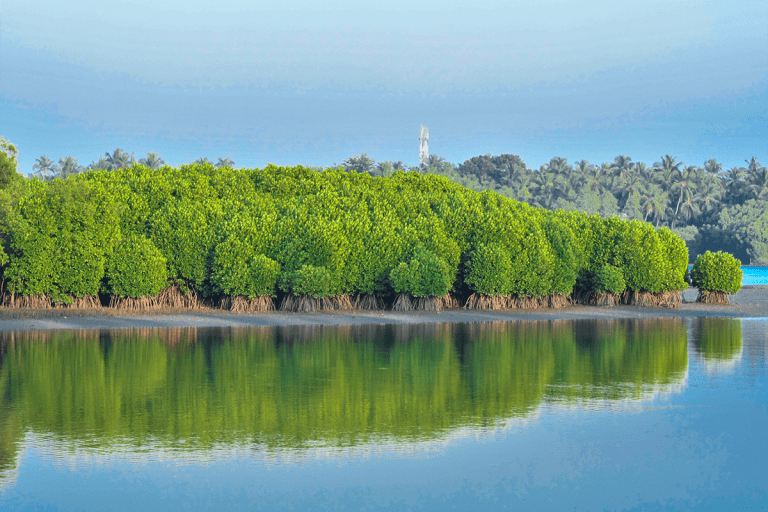
Mangrove forests known as ‘rainforests’ by the sea’ are one of the most important coastal ecosystems in the world in terms of primary production and coastal protection. Distributed in the tropical and sub-tropical regions, mangroves reach their maximum development and great luxuriance in Southeast Asia. The luxuriance of mangroves in Southeast Asia has let many to believe that it is the birth place for mangroves and from this region, the seeds and seedling of mangroves might have moved on ocean currents to different coastal regions in the tropical latitudes. In effect, the mangroves got established in marine environments of the tropics.
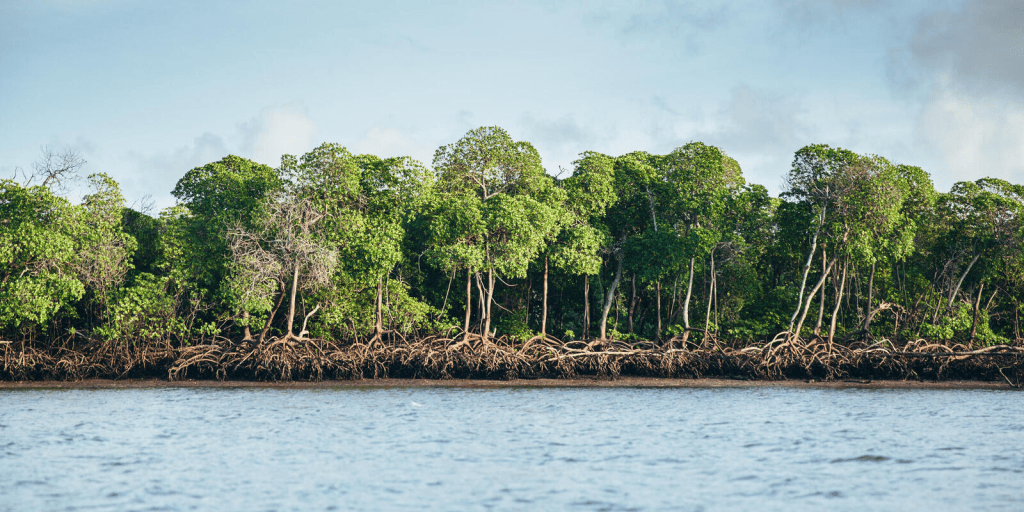
Mangrove trees have special adaptation to live in saline habitats. The specialized seeds of mangroves are tough, float and travel great distances in salt water and take root far from its parent tree. The seeds germinate and grow into seeding right on the parent tree. During this time, they acquire the carbohydrates they need later to grow on their own. The mangrove tree eventually drops its seedlings, where they take root in the mud below or are swept out by the tide. The mangrove trees have unique biological adaptation to survive this marine environment, including reproductive biology, salt tolerance, and growth form. They are well adapted to anoxic sediments. They produce aerial and tap roots which filter out the salt in the brackish water they grow in and support roots which grow directly into the mud to anchor them. Breathing roots allow them to survive in anoxic sediments. Buttresses and above ground roots enable them to grow in unstable mud flats. Their foliage removes excess salt from the sap and conserves water to cope with periods of high salinity.
Mangrove trees take major role in ecological services in mangrove ecosystems. They contribute to the stabilization of the shoreline and prevention of shore erosion. The dense network of support roots, breathing roots and stilt roots give mechanical support to the tree and trap the sediments. The mangrove trees produce litter by shedding their foliage: foliage drop is a mechanism to remove salt crystals accumulated in it. This foliage enters the mangrove water and produces detritus which in turn is colonized by heterotrophic microorganisms, thus enhancing its nutritive value. This detritus is consumed by the juveniles of a variety of bivalves, shrimps and fishes, which migrate into the mangrove environment for better feeding and protection. Mangrove trees provide nesting sites for many shore birds and serve as home for crab-eating monkeys, proboscis monkeys, fishing cats, lizards, sea turtles, bats, and many more animals. Therefore, mangrove trees are very important to conserve and maintain mangrove ecosystems.
Today mangrove forests are one of the most threatened habitats in the world because of natural and demographic pressures, Mangrove trees act as sinks which concentrate pollutants such as sewage, toxic minerals, pesticide, herbicides, etc. Over time, the stress of the pollutants and reduced light kill large areas of mangrove forests.
Mangrove trees are good sources for firewood for locals, their wood makes a superior kind of charcoal, are sources for tannins, resins, medicines, etc. and many trees are cut down to sustain local interests. In effect, mangrove forests are under stress, turning into more fragile ecosystems. In India, the total area of mangroves was estimated to be 6,740 sq km as per the Status Report of the Government of India (1987) but the Indian Remote Sensing Data have shown that the total mangrove area is 4,474 km only. The available mangrove cover is highly subject to human pressures.
Public awareness and education about the mangrove forests help us to protect our mangrove ecosystems. It is also important to involve local communities in managing and protecting their mangroves. Designated conservation areas also save some of these forests. Further, the government at central, state and local level must enforce laws and regulate development and industry to save the mangrove lands.
You can also find out more here;
http://en.wikipedia.org/wiki/Mangrove
http://www.ethnobiomed.com/content/2/1/24
http://envis.maharashtra.gov.in/envis_data/files/Mimportants.html
http://serendip.brynmawr.edu/biology/b103/f00/web3/hayesconroyj3.html
http://www.mangroves.godrej.com/Whyshouldweprotectmangroves.htm



 Newlinkroad's Blog
Leave a comment