|
From TIMES NEWS NETWORK 10th March 2012
Imagine being able to walk or cycle from Malad to Colaba or Chembur to south Mumbai along well-maintained walking-and-cycling tracks, with gardens and parks to view or rest in along the way. Maybe you could even stop by a beach. Sounds unreal, especially in a city like Mumbai, which offers an abysmal amount of open space to its 12.4 million residents.
But this is one of the longer-term goals of the Open Mumbai plan, endorsed by the New Link Road Residents Forum and being promoted by city architect P K Das and his team, who seek to change the way Mumbai deals with open spaces. The plan may sound fanciful but a year of research, documentation, mapping and collating statistics has gone into developing a vision that seeks to place “people and community life at the centre of planning, not real estate and construction potential”.
The team has mapped a variety of open spaces and other green zones across the city, in the bargain concluding that Mumbai sprawls across 482.7 square kilometres and not 437, as commonly cited. The team has concluded that an incredible 43%, or 208.2 sq km, of Mumbai includes green zones like gardens, playgrounds, encroached open spaces, no-development zones, lakes, wetlands and beaches. Much of this can be developed as public spaces or at least protected from land sharks; mangroves, for example, could have boardwalks for viewing or strolls.
The plan seeks to link neighbourhoods to parks, walking tracks, beaches and promenades. “It seeks to network open spaces in a way that enables and nurtures social networking. Disparate open spaces, disparate activity, disparate public life can be integrated into a comprehensive whole,” Das says. “The quality of public spaces a city offers its residents is a reflection of the residents’ dignity and quality of life.”
An example of how an area can be interlinked is in the Juhu Vision Plan, which seeks to integrate the beach with playgrounds, walking and cycling tracks. Authorities have already begun building tracks along the Irla Nullah with MPLAD funds given by Javed Akhtar.
Overall, Das’s team calls for amendments and provisions to be included in the Development Plan and Development Control Regulations to facilitate a makeover in Mumbai. The plan calls for an Open Mumbai Board, made up of governmental agencies and citizens’ groups, to prepare a comprehensive plan for developing open spaces, “thereby improving the quality of life and environment of the city”.
Roadblocks cleared for Juhu ‘city forest’
After a seven-year-long battle with a private agency, members of Save Open Spaces (SOS), a Juhu citizens group, succeeded in saving a vital recreation ground plot, earmarked as a ‘city forest’ at JVPD scheme. It was former municipal commissioner S S Tinaikar’s vision.
The plot is adjacent to Vidyanidhi High School at JVPD scheme. Citizens had made a last-ditch effort to save the plot on January 18, 2011, and met municipal commissioner Subodh Kumar.
Citizens submitted a design plan, which was approved by civic authorities.
The design plan includes growing a forest alongside the Irla nullah, building walking and cycling tracks, introducing cultural spaces such as a small amphitheatre, an art exhibition centre, children’s play area and a garden.
Get the Plot
In 2004, citizens started a battle to save an 18-acre Juhu plot earmarked as ‘city forest’
In Jan 2011, a delegation met civic chief Subodh Kumar
In March 2011, Kumar approved a proposal to cancel Ronson Foundation’s lease, which had been given on a caretaker basis
In Aug 2011, BMC gave its nod to take possession of plot Cross Maidan gets a clean, mean look
t was a long-drawn battle
Ifor residents of Churchgate to get the authorities to take note of four acres of Cross Maidan that had turned into a no-man’s land. The space that was encroached upon and rendered absolutely unusable became a sanctuary for residents in June 2010. Nearly four acres of Cross Maidan near Churchgate at one end of Fashion Street was thrown open to public.
For years, the patch had become a cradle for hutments and fences were broken. Residents recall it as a virtual “dumping ground”.
The Organisation for Verdant Ambience and Land (Oval) Trust conceptualized the project’s beautification. The plot now has a large expanse of trees, lawns, walking tracks and benches for seniors.
The Cross Maidan garden was handed over to the Oval Trust in 2006. At that time, it was discovered that the government resolution (GR) did not include more than an acre of the southern edge of the ground hawkers had encroached upon. “The process of getting another GR for that space took many years, and this area was handed over to the trust in October 2009. The entire procedure was lengthy but we kept going,” said Nayana Kathpalia, one of the trustees of the Oval Trust.
“Even after the plot was handed over to us, the government gave it without clearing the encroachments. In fact, even now there is a commercial office functioning in the garden which needs to be cleared,” Kathpalia said.
Cross-Over To Beauty
For years, Cross Maidan remained encroached upon, its fences were broken and it was rendered unusable The maidan’s beautification was conceptualized by the Organisation for Verdant Ambience and Land (Oval) Trust
In June 2010, nearly four acres of the new-improved maidan were thrown open to the public
The plot now has a large expanse of trees, lawns, walking tracks as well as benches for senior citizensFirst Pasta Lane walks up the garden path
The struggle was probably as long and difficult as the task to transform an encroached space into a lush garden. After a long court battle and follow-ups with the BMC and government agencies, First Pasta Lane of Colaba finally got a green lung.
It all began 23 years ago with a residents’ movement against an eatery’s kitchen, a godown and a garage that had encroached upon municipal plots earmarked as gardens and a recreational ground. The movement lost momentum later and was revived in 2006 when the First Pasta Lane Residents’ Association, through an RTI query, found out that the eatery stood on a BMC plot.
Residents followed up with the BMC for over two years and the kitchen was demolished. Preparations to create the garden started in December 2009, said Vijay Advani, joint secretary of the First Pasta Lane Residents’ Association.
Pasta Perfect
23 years ago, Colaba residents first raised their voice against an eatery’s kitchen, a godown and a garage that had encroached upon municipal plots earmarked as gardens and a ground
In 2008, BMC demolished the eatery’s kitchen; preparations to create the garden started in December 2009 and it was thrown open to the public in 2010
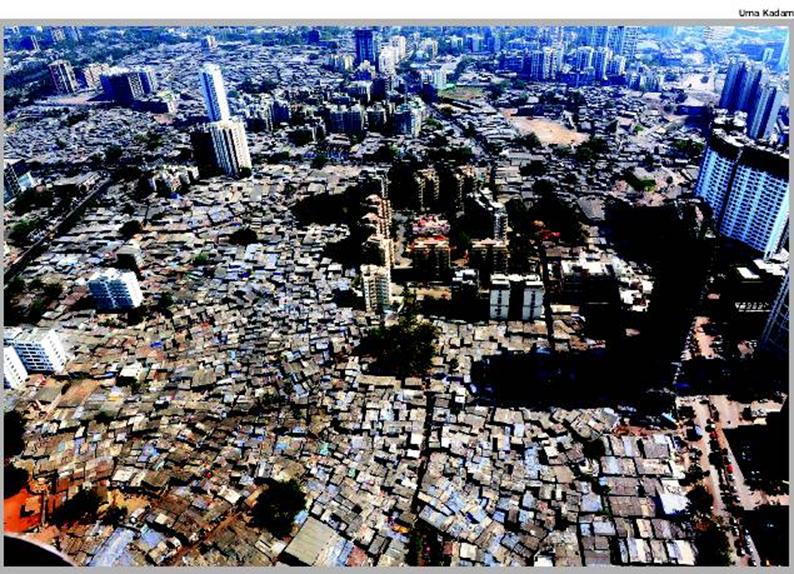
WHERE’S MY PLAYGROUND? A bird’s-eye view of the Andheri-Malad area shows high-rises and slums battling for space and just a small barren patch of land that could serve as a recreation area


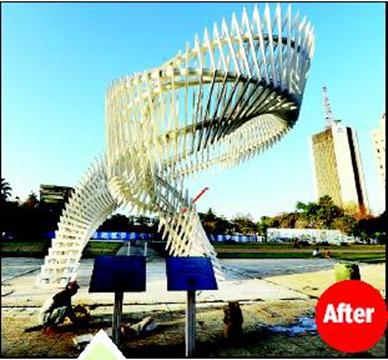

It took us years to get the govt to pay heed to this plot. Now, Cross Maidan garden must be taken as an example of how a haven can be created with consistent efforts. The govt must ideally do its work and then seek citizens’ help
Nayana Katpalia | TRUSTEE, OVAL TRUST

We used the ground as one of the venues for Kala Ghoda festival. A gate must be made at the Veer Nariman Road end to attract more visitors. The encroached ground is cleared. It is an example of how a dump yard can be converted into a green haven Shirin Bharucha | WORKS WITH URBAN RENEWAL TRUSTS

It has benefited the whole community. Because of the kitchen, there was a lot of pollution. But now, we have a long stretch of open space, which is unusual in Mumbai. We have greenery and a garden. Neighbouring slumdwellers also use it
Dilip Mehrotra | A RESIDENT

|





 Newlinkroad's Blog
Leave a comment