Filthy water worries fixed? Now scrub your building’s grimy tank!
Clean Water provided by BMC mixes With Residual Dirt in Tanks, Says BMC
TIMES NEWS NETWORK 10th July 2013
BMC officials, who finally began visiting areas from where complaints of filthy water had been pouring in, stumbled upon its hazardous fallout—grimy storage tanks in several buildings.
Even as officials claimed to have resolved the turbidity problem, they advise urgent cleaning of tanks as the clean water now being supplied comes in contact with residual dirt in the tanks. Officials said turbid water during monsoons is common as it often enters old and porous pipelines.

Civic officials said complaints of dirty water had been coming in from most parts of south central Mumbai and the eastern suburbs due to contamination in pipelines on the city’s outskirts.
They even found storage tanks that had not been cleaned for years and had developed a shockingly thick layer of filth and algae.
“A lot of algae and metallic elements get deposited on a tank’s sides over a period of time. Not cleaning the tanks at regular intervals leads to the supply of contaminated water to your homes,” said a civic official.
The BMC officials advised societies to hire agencies who undertake professional cleaning of tanks by using bleach and other agents.
Priyanka Jain, a resident of Balram Nivas building in Dadar, got dirty water the entire month of June. She said the BMC has asked the society to clean the tanks and that it is in the process of finalizing an agency for the task.
“Civic officials visited the building and said there is a chance that the water is getting contaminated with the mud in the storage tank and so we are still getting turbid water,” said Jain.
A consultant who advises societies on water solutions such as purifiers and cleaning of tanks said very few societies pay attention to regular cleaning of tanks.
For over two weeks, the BMC had been receiving complaints of turbid tap water from areas such as Dadar, Naigaon, Ghatkopar, Kurla, Byculla and Mazgaon. The BMC data states that every monsoon, the number of water contamination complaints surges. On an average, 15-18% of the water samples taken during monsoon are found to be contaminated. “The cause of contamination is old and rickety pipelines, and sewage and muddy water getting mixed with the water-carrying pipelines,” said an official.
CLEAR AND POTABLE? FROM THE PIPELINE TO YOUR TAP
If dirty water enters your building’s storage tank
The filth is likely to settle in the tank
Even after the problem is rectified, there is a chance that contaminated water will flow from your tap as clear water would get mixed with the residual filth accumulated in the tank
A tank’s ceiling has the highest density of germs and bacteria due to the oxygen availability and dampness
It is therefore critical to clean the tank regularly; you can call a professional agency to undertake the task
You will have to keep the tank empty for the purpose. The tank must be cleaned well before the supply hours so that it is fit for storing water
Areas where filthy water was being supplied till Tuesday
DONGRI, BYCULLA, DADAR, NAIGAON, KURLA, GHATKOPAR AND VIKHROLI
Reasons: Water lines located at the city’s outskirts that supply water to the south centr and eastern parts of the city got contaminate
The BMC has since claimed to have rectifie the problem. It has promised that the water no longer be turbid
How is a water tank cleaned?
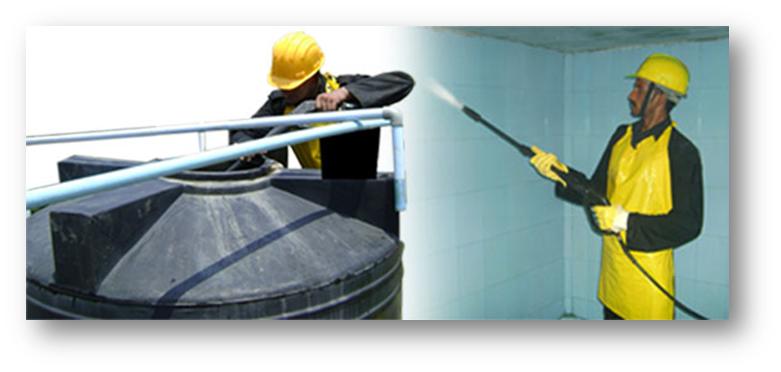
Walls and ceilings of tanks are cleaned with a special high pressure jet cleaning system
Sludge and dirty water are removed using a special sludge dewatering pump; dirty water is thrown out
After the sludge is removed, the floor of the tank is thoroughly cleaned with the water jet system
The remaining sludge is once again pumped out of the tank. The tank is cleaned using anti-bacterial agents like phenyl. Lastly, anti-bacterial, chlorine-based sprays are used.





 Newlinkroad's Blog
Leave a comment