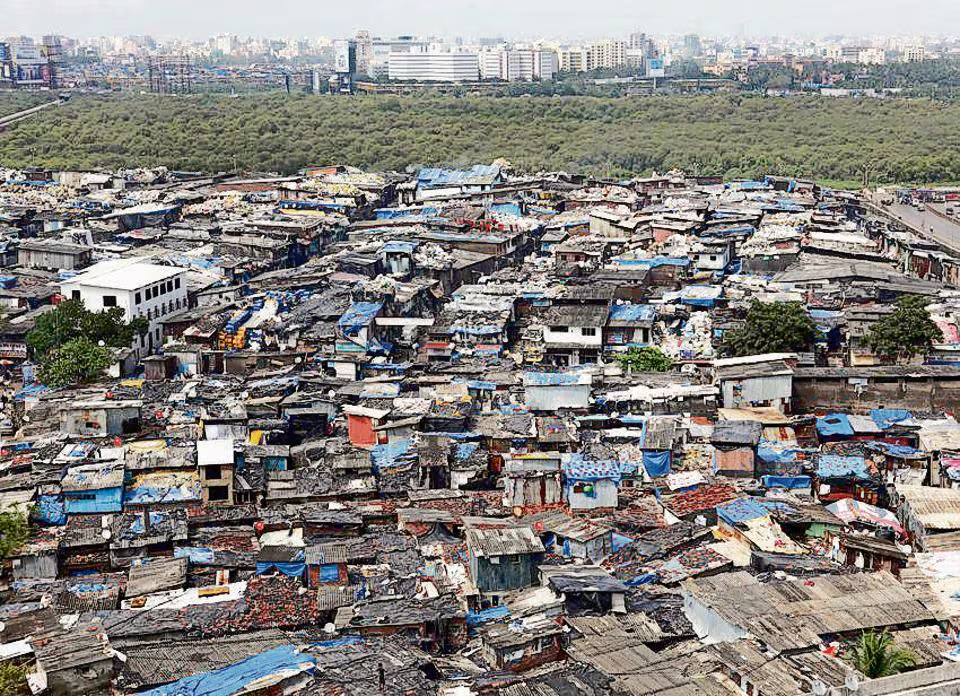
The adverse health effects of air pollution caused by burning of biomass by illegal slums which have settled on pristine protected mangroves in many parts of Mumbai and especially at Ganpat Patil Nagar have been pointed out by Dr. S. P. Mathew, Physician, and others from the New Link Road Forum many times in the past.
See https://newlinkroad.wordpress.com/2014/01/16/ground-level-air-pollution-tackling/
And https://newlinkroad.wordpress.com/2013/03/07/air-pollution-killing-urban-india/
And https://newlinkroad.wordpress.com/2011/07/06/pollution-from-slums-and-illegal-industries-killing-us/
On 25 May 2014 the Hindustan Times (Mumbai) carried a Front Page article on the same by Snehal Rebello snehal.rebello@hindustantimes.com
Burning farm waste, forest fires major cause of pollution
ZoomBookmarkSharePrintListenTranslate
MUMBAI: It’s not just vehicular emissions that are responsible for impure air. Pollution from burning wood and agriculture waste, and forest fires in rural India are equally responsible for people in cities such as Delhi, Nagpur and Hyderabad breathing toxic air.
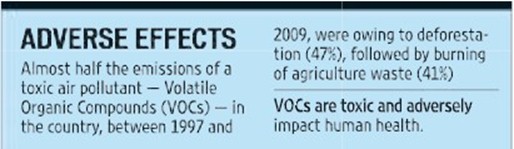
Almost half the emissions of a toxic air pollutant — Volatile Organic Compounds (VOCs) — in the country, between 1997 and 2009, were owing to deforestation (47%), followed by burning of agriculture waste (41%). This was revealed by an analysis of emissions from biomass burning in rural areas by Ahmedabad-based Physical Research Laboratory (PRL), who were supported by the Department of Space, and FIT Engineering College, Meerut.
According to scientists, these VOCs disperse in the air and spread to nearby cities and urban areas during winter and pre-monsoon seasons, contaminating the environment and causing respiratory illnesses as they can travel through the air, groundwater and soil. Some VOCs such as benzene are identified as a potential carcinogenic by the International Agency for Cancer Research.
VOCs are also responsible for the formation of groundlevel o z one and org anic aerosols, which are serious components of air pollution and urban smog, apart from having harmful effects on agriculture, vegetation and leading to reduced visibility.
“VOC emissions from biomass burning sources are important precursors of ozone, a pollutant in the lower atmosphere, adversely impacting human health and crop yield,” said Lokesh Kumar Sahu, principal investigator, space and atmospheric sciences division, PRL.





 Newlinkroad's Blog
Leave a comment