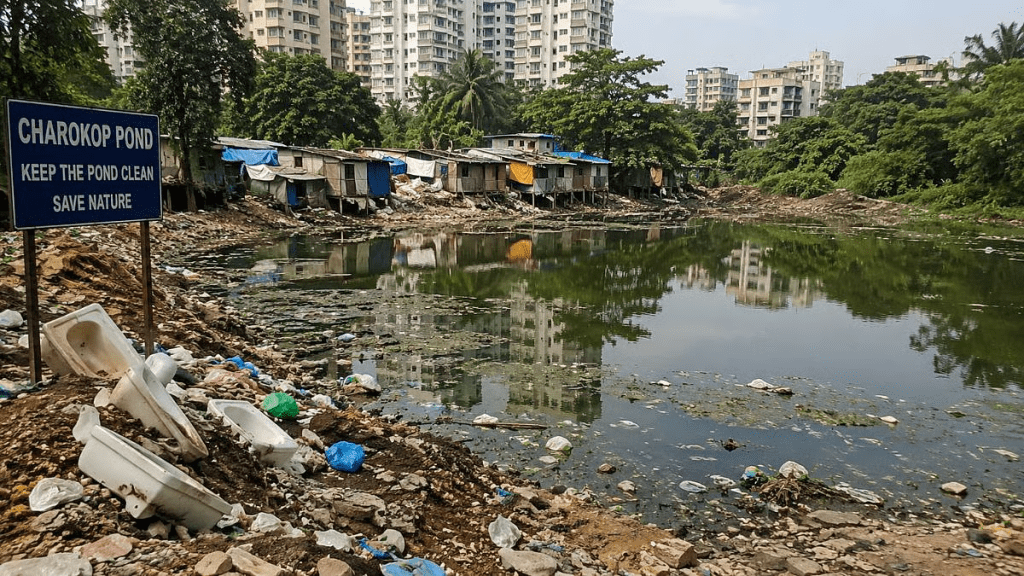
Air in Mumbai is vital for its citizens. Are they bothered about it? This article is adapted from a report in the Hindustan Times shows what is happening to our air, mainly due to the illegal activities in pristine mangrove forests in Mumbai, which our Forum has been highlighting since the past many years.
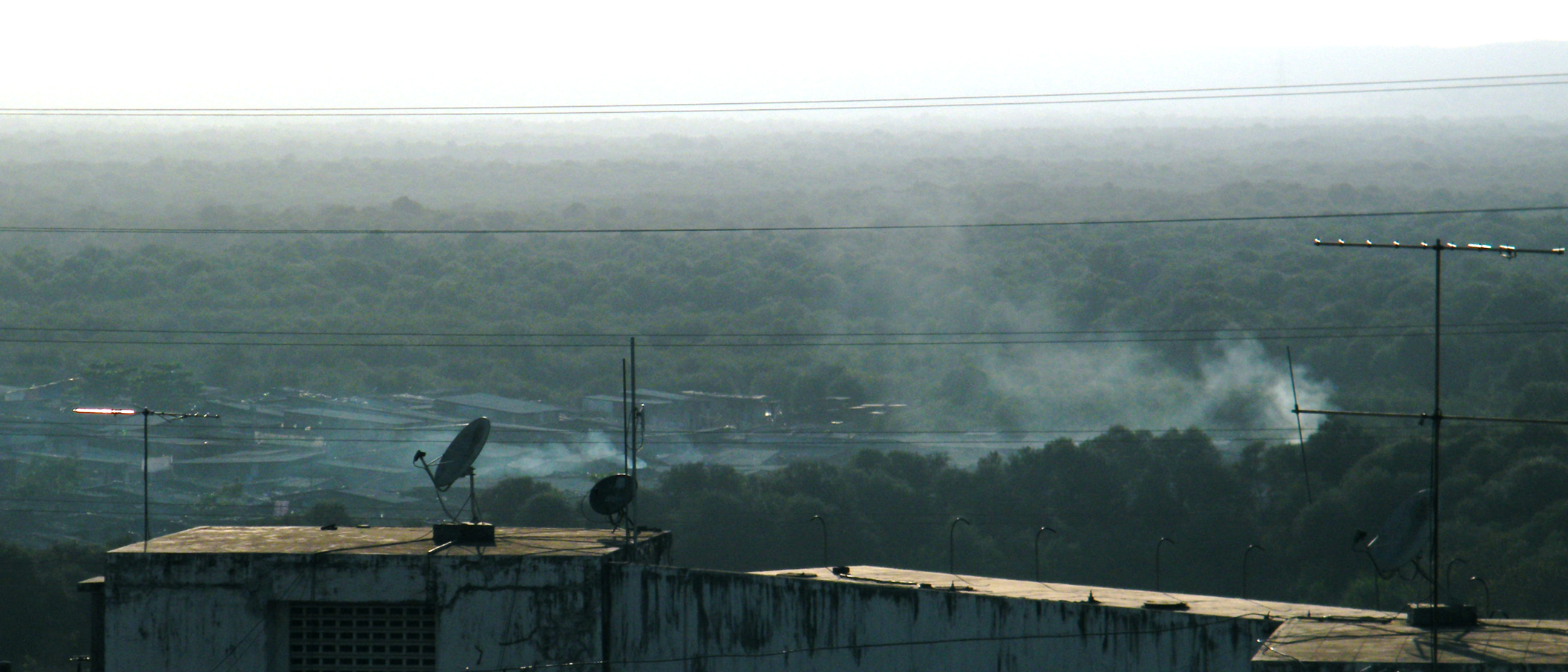
Figure 1 Deadly air pollution from illegal slums in once virgin mangrove forests killing citizens of Mumbai
5 Jun 2014, Hindustan Times (Mumbai, Sayli Udas Mankikar sayli.mankikar@hindustantimes.com
City’s air most polluted, harmful in Maharashtra
MUMBAI: It may come as no surprise, but the city has fared the worst among seven major metro cities in the state, including Pune, Mumbai, Navi Mumbai and Nashik.
This was found after testing air quality for suspended particulate matter and pollution [by vehicular traffic] between January and December 2013
According to the figures in the Economic Survey of Maharashtra 2013-14, taken from the Maharashtra Pollution Control Board, the respiratory suspended particulate matter (RSPM), which are air-borne particles, averaged at 137.9 microgram per cubic centimetre (ug/ m3) and reached a maximum of 428 ug/m3. The minimum permissible limit is 100 ug/m3.
In 2012, it was 124.49 ug/m3,
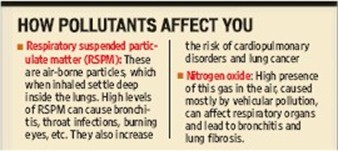
These are air-borne particles, which when inhaled settle deep inside the lungs. High levels of RSPM can cause bronchitis, throat infections, burning eyes, etc. They also increase but the maximum level was higher at 535 ug/m3.
RSPM is dangerous as it can affect the efficiency of respiratory organs. High levels of particulate matter can result in bronchitis, sinusitis, throat infections, runny nose, burning eyes and cough, among other things. It also increases the risk of cardiopulmonary disorders and lung cancer.
For the second year in a row, Mumbai topped the list for air quality deterioration because the risk of cardiopulmonary disorders and lung cancer
High presence of this gas in the air, caused mostly by biomass burning and vehicular pollution, can affect respiratory organs and lead to bronchitis and lung fibrosis. Nitrogen oxide is a product of vehicular and industrial pollution. The permissible limit for NO is 80 ug/m3, and Mumbai’s readings are at 117 ug/m3.
While the city did not top the list in noise pollution levels, it exceeded the permissible limits. The residential area of Shivaji Park recorded an average of 68 decibel (dB) during the day (permissible limit is 55). At night it was 62 (dB), still above the 45 dB limit.
The New Link Road Residents Forum has been fighting for the cause of the environment and clean air for its citizens. Join the fight. Send us an email on newlinkroad@gmail.com today.




Leave a Reply